
Phone: +86-133 5263 6504
Phone: +86-133 5263 6504
A New Benchmark for Electronic Protection: Conformal Coating Process from Manual to Fully Automatic
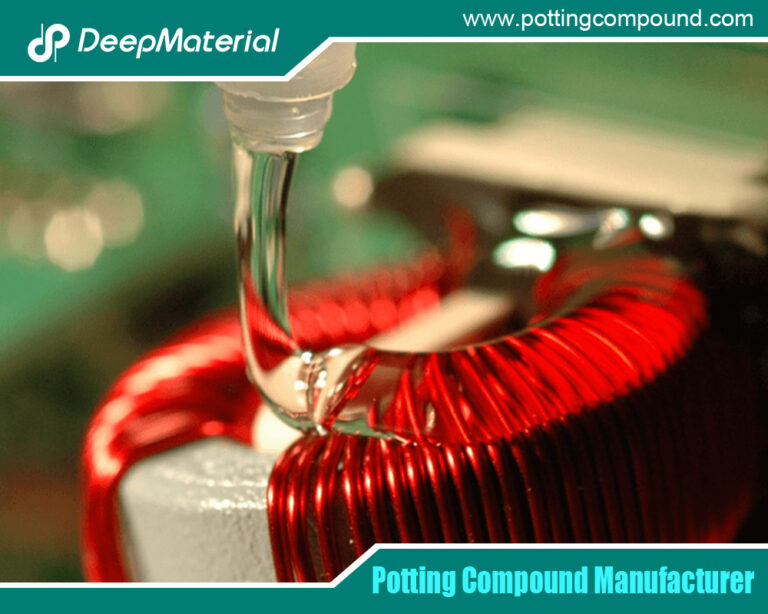
In the rapidly evolving world of electronics manufacturing, protecting sensitive components from environmental hazards has become paramount. Conformal coating, a thin polymeric film applied to printed circuit boards (PCBs), serves as a frontline defense against moisture, dust, chemicals, and extreme temperatures. This protective layer not only enhances the reliability and longevity of electronic devices but also enables their deployment in harsh environments, from automotive systems to aerospace applications. As industries demand higher precision, efficiency, and scalability, the conformal coating process has undergone a transformative journey—from labor-intensive manual methods to sophisticated fully automatic systems. This evolution represents a new benchmark in electronic protection, where automation minimizes human error, boosts productivity, and ensures consistent quality. In this article, we explore the fundamentals of conformal coating, trace its progression through various application methods, highlight the benefits and challenges of automation, examine real-world case studies, and look ahead to future trends shaping this critical technology.
The importance of conformal coating cannot be overstated. With the proliferation of Internet of Things (IoT) devices, electric vehicles, and wearable electronics, PCBs are increasingly exposed to corrosive atmospheres and mechanical stresses. Traditional methods, while effective in small-scale production, often fall short in meeting modern demands for speed and uniformity. The shift toward automation addresses these limitations, setting a new standard for reliability in electronics protection. By delving into this progression, manufacturers can better understand how to optimize their processes for superior performance and cost-effectiveness.

What is Conformal Coating?
Conformal coating is a specialized protective material applied to the surface of assembled PCBs to safeguard electronic components from environmental and operational threats. The term “conformal” refers to the coating’s ability to conform to the contours of the board, creating a uniform, insulating layer typically ranging from 25 to 250 micrometers in thickness. This barrier prevents issues such as corrosion, electrical shorts, and dendritic growth, which can lead to device failure.
There are several types of conformal coatings, each suited to specific applications. Acrylic coatings offer excellent moisture resistance and ease of rework but may lack robustness against chemicals. Silicone coatings provide superior thermal stability and flexibility, ideal for high-vibration environments. Polyurethane variants excel in abrasion resistance, while parylene coatings deliver exceptional dielectric properties through vapor deposition, though they are more expensive and harder to apply. UV-curable coatings have gained popularity for their rapid curing times, reducing production bottlenecks.
The primary function of conformal coating is to enhance PCB reliability. It increases dielectric resistance, maintains operational integrity, and protects against corrosive elements like salt spray and fungal growth. In industries such as automotive, medical devices, and consumer electronics, where failure can have severe consequences, conformal coating is indispensable. However, the effectiveness of the coating depends heavily on the application method, which has evolved significantly over the years to meet escalating demands for precision and efficiency.
Manual Conformal Coating Processes
The origins of conformal coating trace back to the mid-20th century, when electronics were primarily protected through rudimentary manual techniques. These methods, while simple and cost-effective for low-volume production, laid the foundation for more advanced processes.
Brushing is one of the oldest and most straightforward manual approaches. Operators use a brush to apply the coating directly onto the PCB, allowing for targeted coverage in hard-to-reach areas. This method requires minimal equipment—just the coating material and a brush—but it is highly dependent on the skill of the applicator. Inconsistencies in thickness can lead to weak spots, compromising protection.
Dipping involves submerging the entire PCB into a bath of liquid coating material. After withdrawal, excess material drains off, and the board is cured. This technique ensures even coverage but risks coating unwanted areas, such as connectors, necessitating masking—a time-consuming step. Manual dipping is suitable for simple boards but becomes inefficient for complex assemblies with varying component heights.
Hand spraying, using aerosol cans or spray guns, offers greater flexibility. Operators can control the spray pattern to achieve selective coating, but achieving uniform thickness remains challenging. Overspray and material waste are common issues, and exposure to volatile organic compounds (VOCs) poses health risks to workers.
The advantages of manual methods include low initial investment and adaptability for prototypes or custom jobs. However, drawbacks are plentiful: labor intensity leads to higher costs over time, variability in application quality affects reliability, and scalability is limited. As production volumes increased in the late 20th century, the industry recognized the need for more consistent and efficient alternatives, paving the way for semi-automatic systems.
Transition to Semi-Automatic Methods
The 1980s and 1990s marked a pivotal shift as manufacturers began integrating automation elements into conformal coating processes. Semi-automatic methods bridge the gap between manual labor and full robotics, incorporating mechanized tools to enhance precision while still requiring human oversight.
Selective spraying systems exemplify this transition. These setups use programmable spray heads mounted on manual or basic automated arms, allowing operators to define coating paths via simple software. Masking is often still manual, but the application itself is more controlled, reducing waste and improving uniformity compared to hand spraying. Automated dipping machines emerged as well, featuring conveyor systems that dip boards at controlled speeds and angles. Operators load and unload boards, but the dipping and draining processes are mechanized, minimizing human error in timing and exposure.
Vapor deposition for parylene coatings also saw semi-automation, with vacuum chambers handling the deposition while technicians manage preparation and curing. These methods improved throughput for medium-volume production but still relied on skilled labor for setup and quality checks.
The transition to semi-automatic processes addressed many manual shortcomings, such as inconsistency and fatigue-related errors. Labor costs decreased slightly, and quality improved, but challenges like setup time and the need for operator training persisted. As electronics complexity grew—with denser components and tighter tolerances—the industry pushed toward fully automatic systems to achieve the next level of efficiency.
Fully Automatic Conformal Coating Systems
Fully automatic conformal coating represents the pinnacle of process evolution, leveraging robotics, advanced sensors, and integrated software for end-to-end automation. These systems eliminate most human intervention, from masking to inspection, setting a new benchmark for electronic protection.
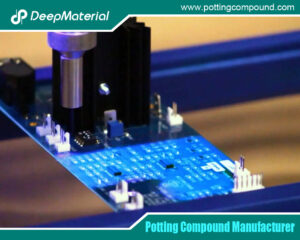
Modern automatic coaters, such as robotic selective coating machines, use multi-axis arms equipped with precision nozzles. Programmable via CAD data from PCB designs, they apply coatings only to specified areas, avoiding connectors and sensitive components. UV inspection lights and cameras ensure real-time quality control, detecting defects like bubbles or thin spots.
Conveyor-integrated systems allow seamless integration into assembly lines. Boards enter the machine, undergo automated cleaning, masking (often via robotic dispensing of temporary masks), coating, curing (using UV, heat, or moisture), and final inspection—all without manual handling. Examples include the Nordson ASYMTEK Select Coat SL-940, which automates coating and inspection, and the Anda iCoat-5, designed for high-speed precision.
These machines handle hundreds of boards per hour, far surpassing manual rates. The automation extends to curing, with inline ovens or UV chambers ensuring consistent results. Advanced features like flow monitoring and viscosity control maintain material properties, further enhancing reliability.
Benefits of Automation
Automating conformal coating yields numerous advantages, transforming it from a bottleneck to a streamlined process. Foremost is consistency: Robotic systems apply uniform thicknesses, reducing failure rates and improving product reliability. This leads to extended PCB lifespans, with better resistance to environmental damage.
Efficiency gains are substantial. Automated machines coat boards at rates unattainable manually, slashing production times and labor costs. Material waste decreases due to precise application, and rework is minimized.
Safety improves as workers avoid exposure to hazardous chemicals. Scalability supports high-volume manufacturing, crucial for industries like automotive and consumer electronics. Overall, automation enhances mechanical strength, dielectric properties, and protection against contaminants, setting a higher standard for electronic durability.
Challenges and Solutions
Despite its benefits, automating conformal coating presents challenges. High initial investment in equipment and software can deter small manufacturers. Solution: Modular systems allow gradual upgrades, and ROI is achieved through long-term savings.
Material compatibility and process validation require expertise. Variations in coating viscosity or curing conditions can affect outcomes. Advanced sensors and AI-driven adjustments mitigate this. Masking complex boards remains tricky, but robotic dispensing of peelable masks streamlines it. Environmental concerns, like VOC emissions, are addressed with low-VOC or water-based coatings. Training for maintenance is essential, but user-friendly interfaces reduce the learning curve.
Case Studies or Examples
Real-world implementations underscore automation’s impact. Plasma Ruggedized Solutions assisted a defense contractor by automating parylene coating, improving uniformity and reducing defects in harsh-environment electronics. Invention House’s Raphael 4040 system helped a medical device manufacturer enhance safety and throughput, coating intricate PCBs with precision. A recent case involved an electronics firm adopting a new automated machine, revolutionizing production by increasing output and quality for high-risk systems. These examples demonstrate how automation resolves consistency issues and scales operations effectively.
Future Trends
Looking ahead, conformal coating technology is poised for further innovation. Nano-coatings promise thinner, more durable layers with enhanced properties, reducing weight while improving protection. Eco-friendly materials, such as bio-based and low-VOC options, align with sustainability goals.
UV-curable coatings will dominate for faster processing. Integration with Industry 4.0—using AI, IoT, and predictive analytics—will enable real-time monitoring and adaptive processes. Market growth, projected to reach USD 2.11 billion by 2034, reflects rising demand in emerging sectors like EVs and 5G.
Conclusion
The journey of conformal coating from manual to fully automatic processes marks a revolutionary benchmark in electronic protection. What began as artisanal techniques has evolved into high-tech systems that deliver unparalleled reliability, efficiency, and scalability. By embracing automation, manufacturers not only overcome traditional limitations but also future-proof their operations against increasingly demanding environments. As trends like nano-materials and smart integration unfold, conformal coating will continue to safeguard the electronics that power our world, ensuring durability and innovation hand in hand.
For more about a new benchmark for electronic protection: conformal coating process from manual to fully automatic, you can pay a visit to DeepMaterial at https://www.pottingcompound.com/ for more info.